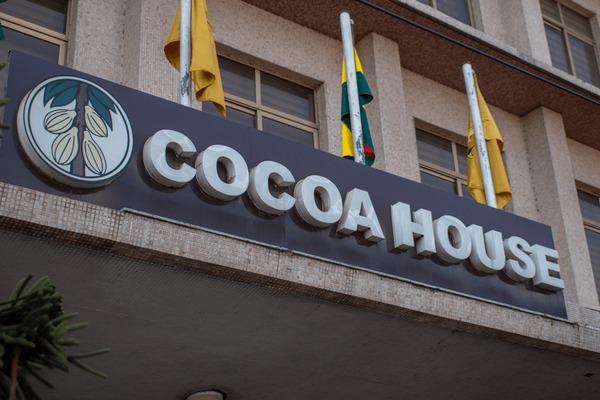
The proposed Ghana Cocoa Board (COCOBOD) Bill, 2026 seeks to overhaul the country’s cocoa sector by consolidating decades-old legislation into a single, modern legal framework.
The proposed legislation is intended to address regulatory inconsistencies, administrative inefficiencies and financial challenges that have increasingly affected the management and performance of Ghana’s cocoa industry.
For nearly four decades, the sector has operated primarily under the Ghana Cocoa Board Act, 1984 (PNDCL 81), alongside several other laws enacted at different times to regulate specific aspects of the industry.
The fragmented legal framework, according to proponents of the Bill, has contributed to legal gaps and overlapping mandates, making coordination among COCOBOD and its partner institutions more difficult.
Those challenges have been associated with declining cocoa production, cocoa smuggling, rising debt, limited local value addition and difficulties in meeting evolving international sustainability standards.
The proposed Bill seeks to establish a comprehensive framework to strengthen governance, improve financial oversight and transparency, and position the cocoa sector to compete more effectively in the global market.
It is expected to impact more than 800,000 cocoa-farming households across the country.
Among the key economic and financial reforms proposed are:
1. Farmers to receive at least 70 per cent of FOB price
The Bill proposes a statutory guarantee that cocoa farmers receive at least 70 per cent of the Gross Free on Board (FOB) price earned by COCOBOD in every crop season.
The provision would establish a legal floor for producer prices and strengthen the connection between international cocoa prices and farmers’ incomes.
2. COCOBOD to return to Finance Ministry
The Bill formally places COCOBOD under the oversight of the Ministry of Finance, following a policy directive in 2025.
Oversight of COCOBOD was previously moved to the Ministry of Food and Agriculture as part of reforms introduced in 2017 and formalised in 2020.
The proposed return underscores COCOBOD’s significant fiscal responsibilities and its reliance on borrowing and other financing arrangements to support cocoa purchases and operations.
3. Cocoa Sector Debt Sinking Fund
The legislation proposes the establishment of a Cocoa Sector Debt Sinking Fund to settle verified historical liabilities accumulated within the cocoa sector.
The Fund would be financed through parliamentary appropriations, proceeds from asset recovery, surcharges and negotiated settlements, with the account operating within the Treasury Single Account.
4. Legacy cocoa debts to be ring-fenced
The Bill seeks to separate debts incurred before the new law comes into force from COCOBOD’s ongoing operations.
The Finance Minister would have powers to resolve the liabilities through debt restructuring, special purpose vehicles, negotiated settlements or debt set-offs.
The objective is to ensure that efforts to clean up COCOBOD’s balance sheet do not undermine farmer payments or the Authority’s ability to finance cocoa purchases.
5. Stricter sanctions for unauthorised borrowing
COCOBOD’s borrowing powers would be restricted to activities directly related to cocoa production, marketing, price stabilisation and value addition.
Officials who authorise borrowing outside the permitted purposes could face fines ranging from 15,000 to 30,000 penalty units, imprisonment of between five and 10 years, and a possible 10-year ban from holding public office.
6. 50 per cent local processing target
The Bill places greater emphasis on domestic value addition by proposing regulations requiring at least 50 per cent of Ghana’s cocoa production to be processed locally over a transitional period.
COCOBOD would be required to facilitate access to cocoa beans, provide financing support, introduce appropriate pricing mechanisms and offer incentives to local processors to help achieve the target.
7. Ban on speculative transactions
COCOBOD would be prohibited from engaging in speculative or highly leveraged financial transactions that expose public funds to excessive risks.
Hedging activities would instead be guided by a formal Cocoa Price Risk and Hedging Policy.
Directors and officers responsible for unauthorised transactions resulting in financial losses could face personal liability through surcharge and recovery proceedings.
8. Producer Price Review Committee given legal backing
The Bill seeks to give statutory recognition to the Producer Price Review Committee, which has historically advised on cocoa producer prices without an explicit legal foundation.
A formal legal mandate is expected to strengthen transparency and accountability in the producer-pricing process and improve confidence among farmers and other stakeholders.
9. Cocoa Stabilisation and Diversification Fund
The proposed legislation also provides for the creation of a Cocoa Stabilisation and Diversification Fund, financed through a percentage of cocoa export proceeds.
The Fund would support farmer income protection, productivity-enhancing investments, climate resilience and interventions during periods of significant volatility in international cocoa prices.
10. Greater access for small processors
The Bill seeks to reduce barriers facing small-scale cocoa processors, chocolatiers and businesses producing cocoa by-products.
It proposes more flexible licensing and regulatory requirements for smaller operators to encourage greater participation in cocoa processing and value addition.
The broader objective is to stimulate entrepreneurship and innovation while widening participation in an industry traditionally dominated by larger players.