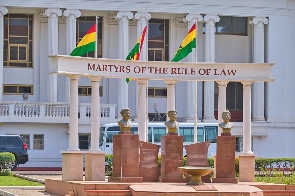
The Supreme Court, in a 4-1 majority decision, has quashed the contempt conviction of Ernest Yaw Kumi, the Member of Parliament for Akwatia, by the Koforidua High Court.
The MP had earlier been convicted of contempt by Justice Emmanuel Senyo Amedahe, who also issued a bench warrant for his arrest. Dissatisfied with the decision, Mr. Kumi’s legal team filed an application for certiorari and prohibition at the Supreme Court.
On Wednesday, a five-member panel of the apex court, presided over by Justice Gabriel Pwamang, granted the application in part.
The Court upheld two out of the five reliefs sought by the MP. Notably, Justice Pwamang dissented in the majority ruling.
The Court’s decision effectively:
Quashed the High Court’s ruling on the contempt application;
Set aside the execution of the bench warrant issued on February 19, 2025;
And barred Justice Amedahe from continuing any further proceedings related to sentencing the MP.
The exact orders include:
“An order quashing the ruling delivered on the contempt application and the execution of the bench warrant issued by the Court dated 19th February 2025 by His Lordship Justice Emmanuel Senyo Amedahe.”
“An order of prohibition against His Lordship Justice Emmanuel Senyo Amedahe from proceeding to sentence the applicant, Hon. Ernest Yaw Kumi, pending the hearing and determination of the instant suit.”
However, three other reliefs sought by the MP were dismissed. These included:
1. A declaration that the election petition filed on December 31, 2024 prior to the official gazetting of the parliamentary results was incompetent and did not properly invoke the High Court’s jurisdiction.
2. A declaration that the contempt proceedings and the ruling of February 19, 2025, based on the “premature” petition, were void and of no effect.
3. An order of certiorari quashing the entire petition, the interim injunction of January 2, 2025, and the related rulings delivered on January 6, 2025, all arising from the said election petition.
The ruling brings temporary relief to the Akwatia legislator while raising new legal questions about the handling of election-related petitions and contempt proceedings in lower courts.