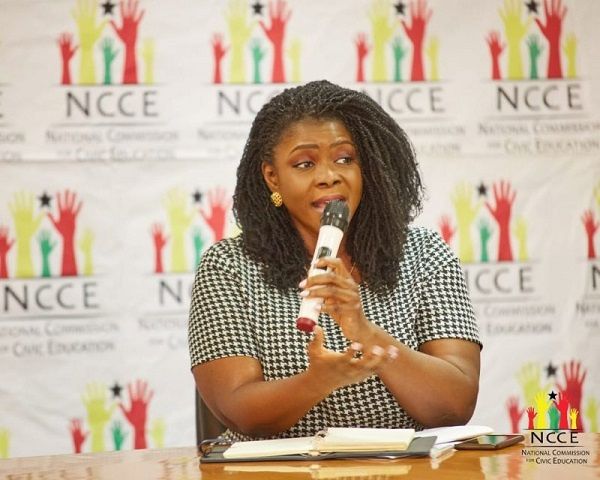
The Chairperson of the National Commission for Civic Education (NCCE), Ms Kathleen Addy, has called for stronger collaboration between the Commission and the media to promote constitutional awareness, responsible citizenship and the consolidation of Ghana’s democracy.
She said the partnership was critical to enabling the NCCE to effectively reach citizens and fulfil its constitutional mandate.
Speaking at a media engagement in Accra on Friday, Ms Addy said the Commission’s impact would be limited without the media’s ability to amplify its civic education initiatives.
“We can succeed in some things, but if we don’t have reach, if we don’t have the media to amplify the things that we do, we will not be as impactful as we can be,” she said.
Ms Addy said the engagement was not merely a social gathering, but an opportunity for the NCCE, journalists and other stakeholders to build relationships, exchange perspectives and deepen mutual understanding.
She expressed concern over the growing threat of misinformation, deliberate disinformation, hate speech, intolerance, online harassment and deepfake content.
According to her, advances in artificial intelligence had made it increasingly possible to create highly convincing but false images, videos and audio recordings, meaning that seeing or hearing something could no longer automatically be regarded as proof.
She said the speed at which information travelled in the digital age had made professional journalism even more important, as inaccurate information could reach thousands of people before being properly verified.
Ms Addy urged journalists to prioritise accuracy, fairness, independence and trustworthiness rather than rushing to be the first to publish.
She said the media had a responsibility to help citizens distinguish facts from falsehood, evidence from mere assertions, and legitimate disagreement from incitement.
The NCCE Chairperson stressed that the Commission was not established to comment on every public controversy, noting that although its mandate was broad, it had clearly defined constitutional functions.
She said the Commission’s key responsibilities included civic education on democracy, human rights, nationalism and patriotism, voter education, peace and conflict resolution, environmental sustainability, global citizenship and anti-corruption.
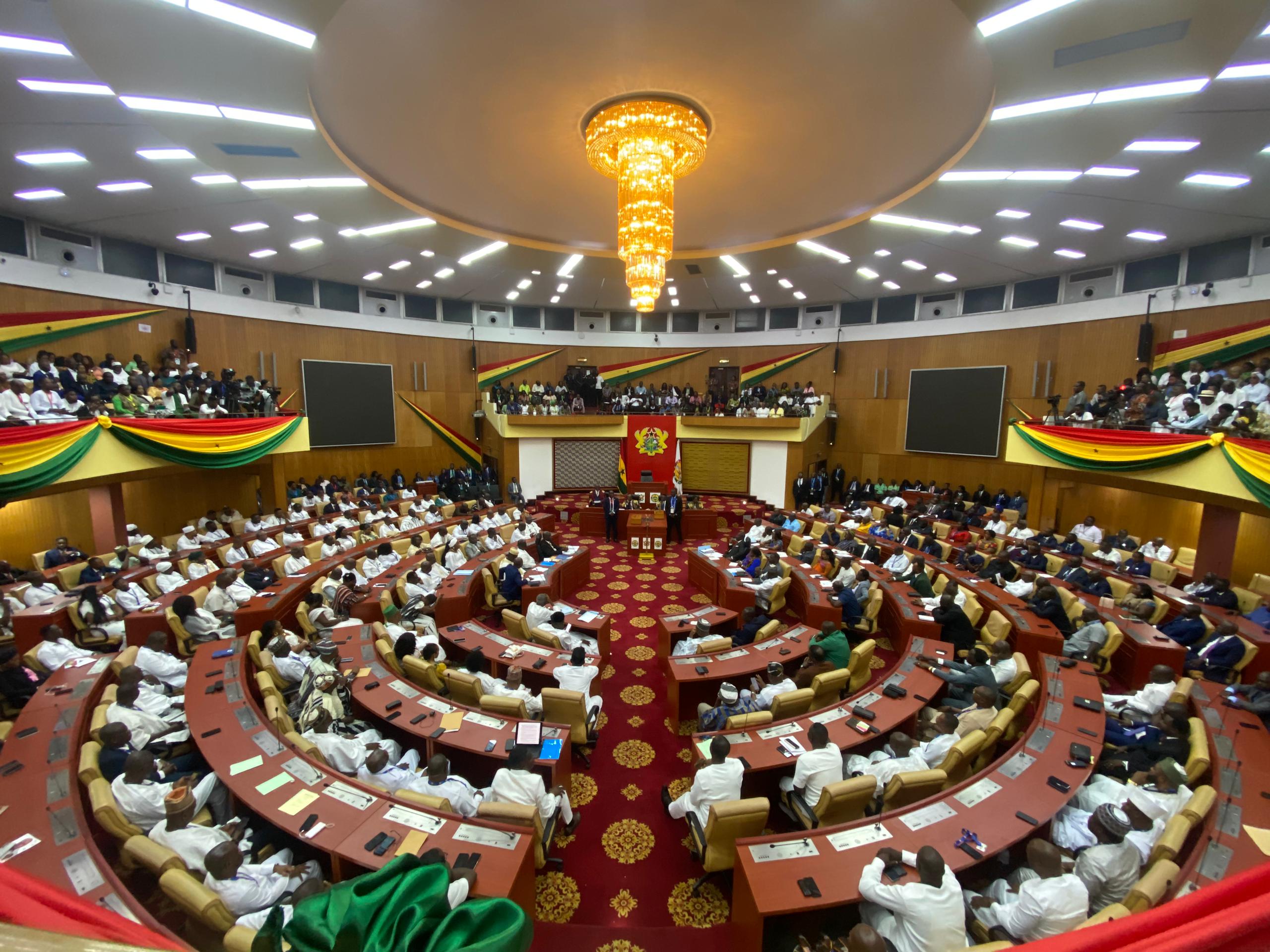
Meanwhile, the Speaker of Parliament, Mr Alban Sumana Kingsford Bagbin, whose speech was read on his behalf, called for civic education to be strengthened and adequately resourced to inculcate responsible citizenship, accountability and public service values.
He said civic education should begin at the grassroots, with schools, civic clubs and other educational institutions playing a central role in shaping the attitudes and values of young people.
Mr Bagbin urged stakeholders to deliberately invest in the younger generation to develop a stronger sense of responsibility towards the country.
“We can approve GH¢1 billion for you, but approval is different from releases,” he said, noting that some institutions received only a fraction of their approved allocations.
The Speaker said citizens must understand both their rights and responsibilities and take an active interest in decisions, laws and policies that affected their lives.
“Democracy is not sustained by elections only. Elections are important, but democracy is much more than the periodic act of casting a ballot,” he said.