The decision by Parliament’s Majority side to block a proposed inquiry into the Gold-for-Reserves programme has drawn sharp criticism from Kojo Oppong Nkrumah, who described the move as a troubling setback for accountability and parliamentary oversight.
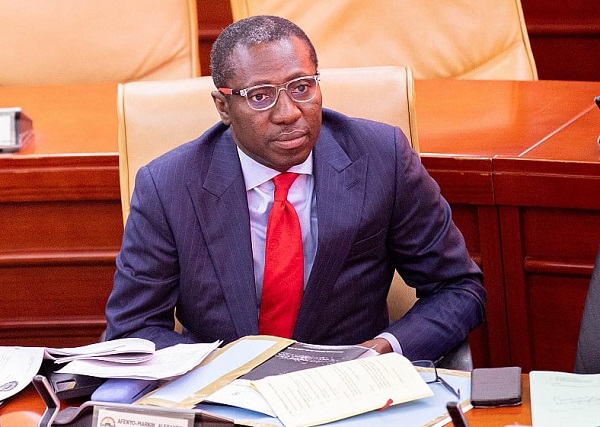
The Ofoase-Ayirebi MP, who also serves as Ranking Member on Parliament’s Economy and Development Committee, had initiated the motion seeking a comprehensive investigation into the programme being run by the Bank of Ghana since 2021.
The motion, debated on Friday, March 27, 2026, aimed to establish an inquiry into the design, operation, financial performance, and cost structure of the policy. The Gold-for-Reserves programme has been a central pillar of Ghana’s economic strategy, intended to boost foreign exchange reserves, stabilise the cedi, and reduce reliance on external currencies by leveraging gold resources.
Historically, Ghana’s foreign exchange accumulation has relied heavily on commodity exports such as cocoa, but the introduction of the Gold-for-Reserves initiative marked a significant policy shift. Proponents have described it as one of the most impactful tools for building reserves in recent decades.
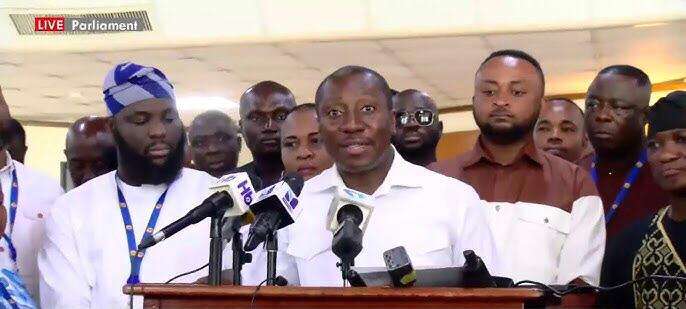
However, according to Kojo Oppong Nkrumah, the scale and importance of the programme make parliamentary scrutiny essential. He argued that Parliament’s rejection of the motion through a voice vote represents a missed opportunity to fully understand the initiative’s performance and address competing claims about its financial outcomes.
At the centre of the controversy are claims that the programme recorded a $214 million loss in 2025. The proposed inquiry was expected to examine these figures alongside the broader operational and financial dynamics of the programme since its inception.
“Why would Parliament decline an opportunity to exercise oversight on a programme it has itself approved?” he questioned, describing the Majority’s stance as a departure from its constitutional responsibility.
He further raised concerns about the programme’s cost structure, alleging that about 15 percent of every $10 million released by the central bank in 2025 went into handling and transactional charges—figures he insists require verification through a formal probe.
The MP also questioned the management of gold reserves, claiming that roughly 50 percent of the gold acquired under the programme was sold in the fourth quarter of 2025, even as calls for an inquiry intensified. He described the move as potentially illogical, especially if the government intends to repurchase gold at higher prices.
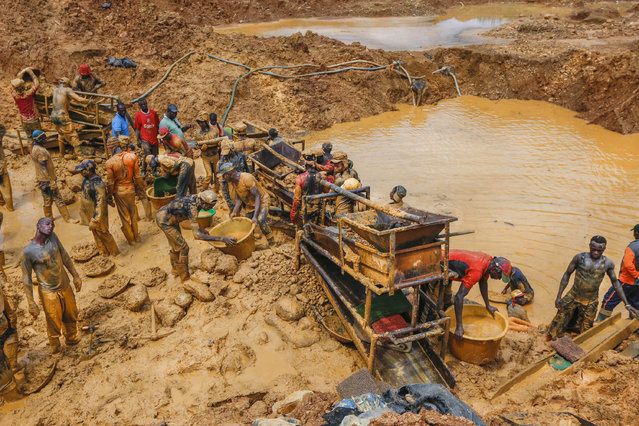
Another key concern relates to the source of gold used in the programme. Kojo Oppong Nkrumah warned that with a significant portion of Ghana’s gold exports coming from small-scale mining much of which is suspected to be linked to illegal mining (galamsey) there is a need to ensure the programme is not indirectly supporting unlawful activities.
He accused the Majority side of prioritising partisanship over a fact-based, bipartisan investigation.
“It is obvious that the Majority side has chosen partisanship over Ghana’s best interest. They prefer propaganda to facts,” he stated.
Despite the rejection of the motion, he indicated that the Minority would continue to pursue accountability through alternative means and expressed confidence that the matter could be revisited in the future.
The development leaves several critical questions about the Gold-for-Reserves programme unresolved, including its actual financial performance, cost efficiency, sourcing practices, and long-term sustainability.