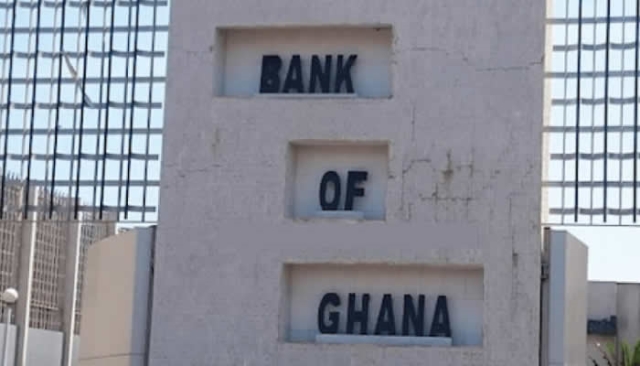
The Bank of Ghana (BoG) has directed all existing Rural and Community Banks to convert into Community Banks by March 31, 2026, as part of a comprehensive reform of the country’s microfinance sector aimed at strengthening financial stability, improving governance, and deepening financial inclusion.
The directive is contained in new Guidelines on the Revised Microfinance Sector Framework issued under the Banks and Specialised Deposit-Taking Institutions Act, 2016 (Act 930) and the Non-Bank Financial Institutions Act, 2008 (Act 774).
The reform abolishes the previous Tier 1–4 classification and introduces four new categories: Microfinance Banks, Community Banks, Credit Unions, and Last-Mile Providers. As part of the restructuring, ARB Apex Bank Limited has been repositioned as a central services hub for the sector.
Under the new framework, Community Banks will operate as licensed deposit-taking institutions serving both rural and urban communities and integrating them into the national financial ecosystem.
Following the mandatory conversion deadline of March 31, 2026, former Rural Banks are required to meet revised minimum capital and regulatory requirements by December 31, 2026. The minimum capital requirement for Community Banks has been set at GH¢5 million, while new urban Community Banks must meet a higher threshold of GH¢10 million.
The Guidelines also introduce broader community ownership requirements, mandating that at least 30 per cent of shares in Community Banks be held by individuals and groups within their operational communities. Maximum shareholding limits have been imposed on individuals, related parties, registered groups, and corporate bodies to promote inclusive ownership. Institutions exceeding these limits are expected to regularise their shareholding structures by the end of 2026.
Banks unable to meet the new capital requirements are required to notify the Bank of Ghana by June 30, 2026, indicating their preferred capitalisation option. Progress reports must be submitted by September 30, 2026. Approved options include standalone recapitalisation, mergers and acquisitions, or supervised transfer of assets and liabilities to stronger institutions to protect depositors.
Institutions that fail to comply with the new requirements risk regulatory sanctions, including possible restrictions on their operations.
Microfinance Banks under the revised framework will serve micro, small and medium enterprises, groups, and individuals. Existing savings and loans companies, finance houses, deposit-taking microfinance companies, and micro-credit companies may transition into Microfinance Banks, subject to minimum capital requirements of GH¢50 million for existing institutions and GH¢100 million for new entrants by December 31, 2026.
Transition plans for Microfinance Banks must be submitted to the central bank by June 30, 2026, with progress updates due by September 30, 2026.
The Guidelines further state that Credit Unions with total assets of at least GH¢60 million maintained over a one-year period will come under direct licensing and supervision by the Bank of Ghana beginning in the second quarter of 2026. Smaller cooperatives and informal financial operators, including susu collectors and rotating savings groups, will be classified as Last-Mile Providers under delegated supervision arrangements.
ARB Apex Bank Limited will provide shared services to Microfinance Banks, Community Banks, and licensed Credit Unions, including reserve management, emergency liquidity support, cheque clearing, specie movement, fund management, payment guarantees, and shared digital infrastructure. The Apex Bank will also coordinate inspections, training, policy implementation, and temporary support for distressed institutions.
The Bank of Ghana said the reforms are intended to address long-standing weaknesses in capital adequacy, governance, and operational efficiency while modernising the sector through improved technology, risk management, and stronger integration into the national financial system.
All existing institutions are required to complete their transition into the new framework by December 31, 2026. The central bank has also placed a temporary restriction on the licensing of new institutions, except for Community Banks in priority areas, to ensure an orderly implementation of the reforms.
The Guidelines take immediate effect, with the Bank of Ghana reserving the right to amend or supplement the framework as necessary.