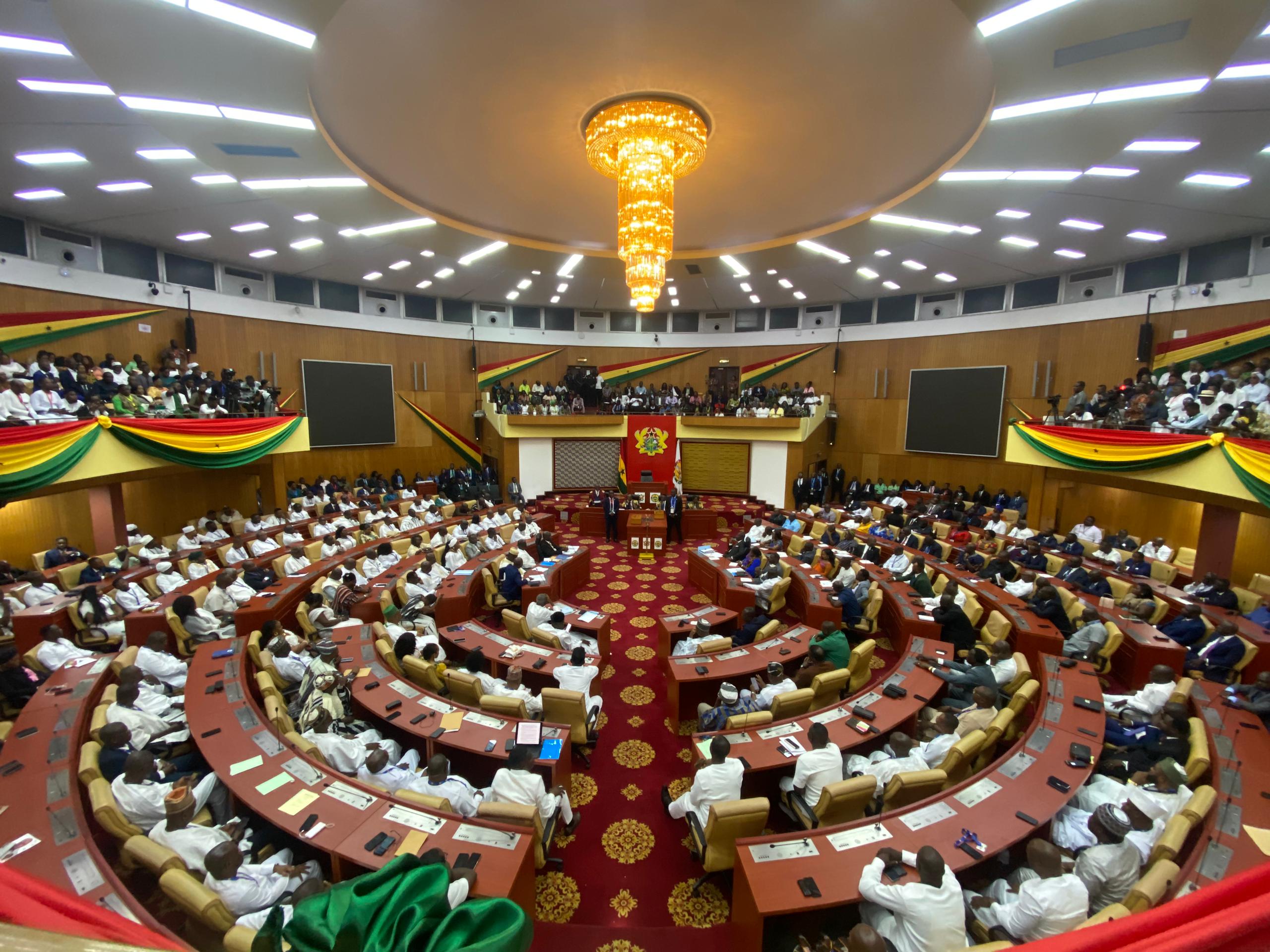
A proposed Security and Intelligence Agencies Bill laid before Parliament on Thursday triggered heated exchanges between the Majority and Minority, as government moves to restructure Ghana’s national security architecture and rename the National Investigations Bureau (NIB).
The bill, presented by the Minister for the Interior, Muntaka Mohammed-Mubarak, seeks to revert the name of the NIB to Bureau of National Intelligence (BNI), citing public confusion with the National Investment Bank, which shares the same acronym.
Under the proposed legislation, the intelligence agency would adopt the name Bureau of National Intelligence, distinct from its former historical title, Bureau of National Investigation.
The bill also proposes scrapping the Ministry for National Security, with oversight responsibilities to be exercised under the Presidency as part of broader efforts to streamline coordination and avoid institutional conflicts.
Presenting the bill, Mr. Mohammed-Mubarak said the reforms were necessary to eliminate ambiguity and improve governance within the security sector.
“Unfortunately, we have a situation where you say NIB, people are wondering whether you are talking about the bank or the security agency. So one of the significant things we are trying to do is to reintroduce the name BNI… Bureau of National Intelligence,” he said.
He added that the restructuring would prevent potential conflicts between a Minister for National Security and the National Security Coordinator, stressing that coordination should be firmly anchored under the President with ministerial oversight rather than through a standalone ministry.
The proposals, however, drew strong opposition from the Minority.
Former Defence Minister Dominic Nitiwul questioned the policy rationale behind the reforms, warning that the changes could create instability and weaken accountability.
“If in four years you are no more in power, are we expecting a new government to also bring a new Act to reflect their direction?” he asked.
“It will be dangerous for this nation to make that office and agency so powerful without proper accountability. It’s a misplaced priority, and if you do that, you’ll suffer.”
Minority Leader Alexander Afenyo-Markin also rejected the bill, arguing that it is politically motivated rather than evidence-based.
“The memorandum before us does not provide any empirical evidence to suggest that Act 1030 has failed,” he said.
“So much power is being given to the coordinator, and it is not clear how his powers are going to be fettered.
“Without clear responsibility, accountability and oversight, this becomes problematic. When citizens’ rights are abused, it will be justified in the name of national security.”
He called for further consultations and amendments to address concerns raised by the Minority.
Responding to the criticisms, Majority Leader Mahama Ayariga defended the bill, describing it as a correction of what he termed a “historical wrong” by the previous administration.
“We decided to cut down the number of ministers, and among the ministries we guillotined was the Ministry for National Security,” he said.
“What you did was to force the hand of a President to appoint a Minister for National Security. It was a wrong thing for us to have done as a Parliament, and this historical wrong has to be corrected.”