The Kantamanto Obroniwawu Businesses Association (KOBA), the unified association representing market section leaders, has welcomed representatives of four major global fashion companies to Kantamanto Market for the launch of the Apparel Recovery Coalition (ARC).
The coalition, co-founded by H&M Group, Inditex, BESTSELLER, adidas and The Or Foundation, with Circle Economy serving as an independent facilitator, seeks to explore how producer responsibility systems can support circular pathways, including reuse, upcycling, recycling and responsible waste management in countries such as Ghana that receive large volumes of exported secondhand clothing.
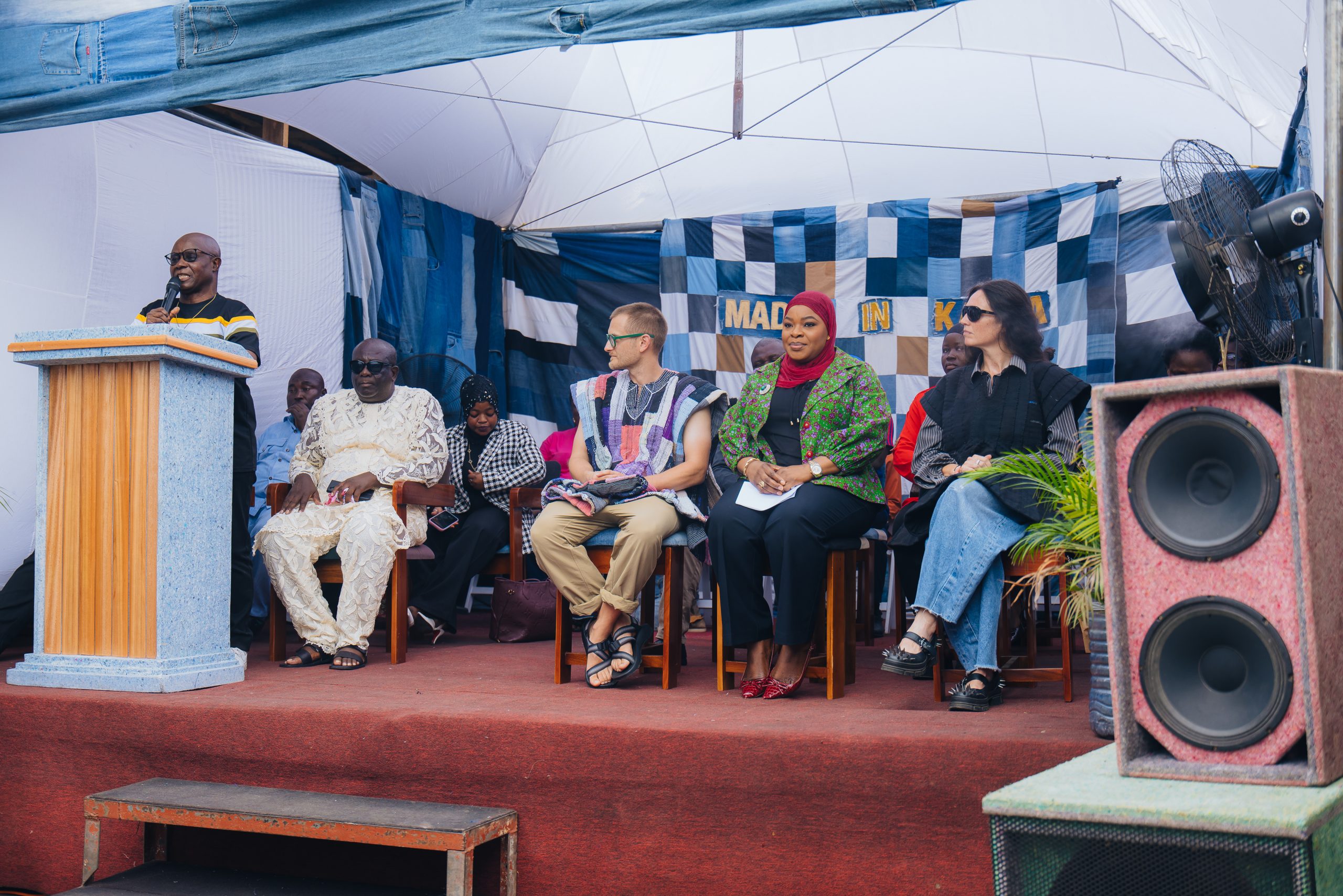
Speaking at the launch, Reverend Opoku Afreh, President of KOBA, said the association expected ARC to build on the existing knowledge, skills and resourcefulness of the Kantamanto community rather than overlook or replace them.
“Our expectation is that ARC will build upon the existing knowledge, skills and resourcefulness of the Kantamanto community rather than overlook or replace them,” he said.
He said members needed access to appropriate infrastructure, investment and opportunities to expand their businesses, improve their livelihoods and strengthen sustainable practices developed over decades.
The launch was held at the heart of Kantamanto Market, one of the major global hubs for secondhand clothing reuse, repair and upcycling.
The market is estimated to recirculate about 25 million garments monthly while supporting the livelihoods of tens of thousands of workers and entrepreneurs.
The event, held at the market’s central Egg Sellers Lane, featured upcycled canopies produced by The Or Foundation’s Remanufactory, while the podium and sound system were made from Cassaboard, a material developed by the foundation’s Material Technology and Transformation Lab using waste textiles.
Representing Dr Julius Debrah, Chief of Staff at the Office of President John Dramani Mahama, Deputy Presidential Spokesperson, Madam Shamima Muslim, said the decision to hold the launch at Kantamanto was significant.
“I thank the Kantamanto Obroni Wawu Businesses Association – KOBA – and The Or Foundation for inviting the Presidency to this market, not a hotel conference room, but here, where the real work happens,” she said.
She described the initiative as a significant step, noting that global fashion brands were engaging directly with the community at the centre of Ghana’s secondhand clothing trade.
Mrs Gifty Anderson, Secretary of the Kantamanto Women’s Association, said decisions concerning the fashion industry were often made outside the communities that subsequently dealt with their consequences.
“Normally these decisions are made from boardrooms overseas, leaving us to deal with the impacts of those decisions. But you have come to us, first to see with your own eyes what we have been dealing with,” she said.
She described the engagement as an important step towards addressing the concerns of the market community, adding that acknowledging the challenges was necessary to finding sustainable solutions.
Currently, producer responsibility systems are largely linked to markets where products are initially sold, although post-consumer textiles frequently cross borders and their environmental and social impacts are experienced in other countries.
The European Environment Agency estimates that about 1.4 million metric tonnes of used textiles are exported from the European Union annually, mainly to countries in Africa and Asia.
Over the next two years, ARC will develop and test a producer responsibility blueprint that reflects the global movement of post-consumer textiles.
The process will involve fashion brands, producer responsibility organisations, sorters, recyclers, policymakers and affected communities to develop practical approaches to managing the social and environmental impacts of textile waste.
As its first demonstration project, ARC will examine how producer responsibility contributions could help strengthen Ghana’s existing circular textile ecosystem.
The coalition said it would build on the work of The Or Foundation over the past 15 years, including initiatives aimed at improving infrastructure at Kantamanto Market, environmental remediation and training programmes across Accra.
About ARC
The Apparel Recovery Coalition (ARC) seeks to bridge the gap between producer responsibility systems and the realities of the secondhand clothing trade, while addressing associated social and environmental impacts.
It is co-founded by H&M Group, Inditex, BESTSELLER, adidas and The Or Foundation, with Circle Economy supporting the coalition as an independent facilitator.
About KOBA
The Kantamanto Obroniwawu Businesses Association is a unified association representing the Kantamanto market community. It was formed following a major fire incident to unite the market’s 13 sections, strengthen disaster preparedness and represent the interests of members in the market’s development.